
Strategy
All-in-one hotel management system
One platform or four specialists? The argument is usually made badly on both sides — vendors selling breadth call integration fragile, vendors selling depth call breadth shallow. Both are sometimes right. Here is how to work out which is true for your property.
- The real question is not features. It is who at your property maintains the joins between systems.
- Independents and small groups: all-in-one usually wins, because nobody there is employed to babysit integrations.
- Operations with a revenue or IT function can justify best-of-breed, because someone owns the problem.
- All-in-one does involve compromise — a specialist product will out-feature a broad one in its niche. The question is whether you need that depth.
- Judge the modules you use most, not the module count.
What all-in-one actually means
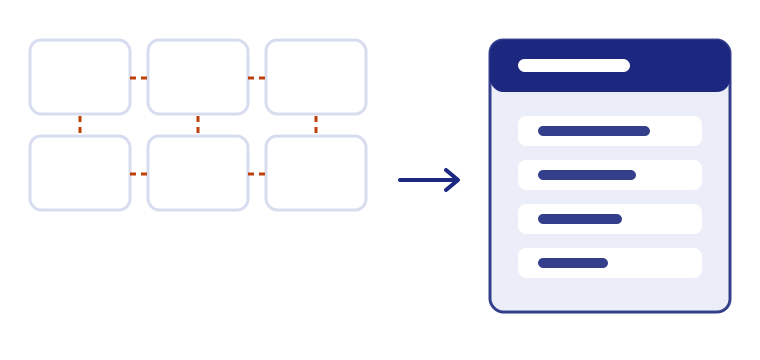
An all-in-one hotel management system covers the functions a property needs from a single vendor, on one login and one database — front desk, booking engine, channel manager, housekeeping, restaurant POS, banquets, stores, accounting.
The alternative, usually called best-of-breed, means choosing the strongest product in each category and connecting them: one vendor's PMS, another's channel manager, a specialist restaurant POS, an accounting package, joined by integrations.
The question that decides it
Most comparisons argue about features. That is the wrong axis, because the features converge more than vendors admit. The question that actually decides it is organisational:
When the connection between two systems stops working, whose job is it to notice?
At a large hotel, there is an answer — a revenue manager, an IT coordinator, someone whose responsibilities include the software stack. Best-of-breed works there because a human being owns the joins.
At a forty-room independent, the honest answer is usually "nobody, until a guest complains". The general manager is also handling purchasing, staffing and a wedding enquiry. In that environment, every integration is a thing that will eventually fail quietly, and the failure will be discovered by a guest.
What actually breaks in a stitched stack
Integrations do not fail dramatically. They fail quietly, which is worse.
| Failure | How you find out | Cost while it runs |
|---|---|---|
| POS stops posting charges to folios | A guest disputes a bill, or month-end does not tally | Days of restaurant revenue never billed |
| Channel sync silently stops | An overbooking, or rooms sitting unsold | Double-sold rooms, or empty ones |
| An API version changes | Nothing obvious — until a report looks wrong | Unknown, which is the problem |
| Accounting import misses a day | At month-end, if anyone checks carefully | Books that quietly diverge from operations |
| Two vendors disagree about whose fault it is | Immediately, and for the next week | Your time, and the problem persisting |
The honest compromise
This page is published by a vendor selling an all-in-one platform, so here is the case against it stated properly.
A company building eight modules cannot make each of them as deep as a company building one. A specialist revenue management system will have pricing intelligence no broad platform matches. A dedicated restaurant POS built for high-volume chains will have modifier handling, franchise reporting and kitchen operations depth beyond what a hotel-first platform offers. A specialist accounting package will do things a PMS's accounting module will not.
Those are real gaps. The question is not whether they exist — they do — but whether they matter to you:
The depth matters if
- You employ a revenue manager who would use the tools
- Your restaurant is a high-volume business in its own right
- You run a complex group structure with consolidated statutory accounts
- You have someone in-house who owns the software stack
- A single percentage point of RevPAR is worth real money to you
The depth is theoretical if
- Nobody would have time to use the advanced features
- Your restaurant serves your guests rather than a separate market
- Your accountant works in Tally and wants a clean export
- The GM is also doing purchasing and HR
- Your last three problems were reconciliation, not pricing
Where all-in-one clearly wins
- Charge-to-room. Restaurant, bar and spa bills reaching the folio in one action rather than crossing a system boundary. See PMS with restaurant POS.
- One inventory pool. Booking engine, channel manager and front desk reading the same availability, so a room genuinely cannot be sold twice.
- Recipe-linked food cost. Only calculable when sales and stock share a database.
- One day-end. Rooms, F&B and banquets on a single report rather than three exports combined in Excel.
- Guest history across everything. What a guest spent in the restaurant belongs on the same profile as what they paid for the room.
- One support call. Nobody establishing whose fault it is before anyone starts fixing.
- One training curve. A team learns one interface, and new staff learn it once.
Where best-of-breed clearly wins
Equally, there are situations where stitching specialists together is straightforwardly the better decision:
| Situation | Why specialists win |
|---|---|
| You employ a revenue manager | They will use pricing tools no broad platform matches, and the RevPAR gain is real |
| The restaurant is a separate business | Own GSTIN, own books, own management — separation is a feature |
| A large group with corporate IT | Someone owns integrations as part of their job |
| You already run a product your team is expert in | Retraining a floor team has a real, immediate cost |
| A niche requirement no platform covers | Casino, marina, ski, medical tourism — specialist needs need specialists |
Vendor concentration and lock-in
The fair objection to all-in-one is dependency: one vendor holding your reservations, your guest data, your F&B and your books. If they raise prices, decline in quality or disappear, you have a bigger problem than if one of four vendors did.
That is a genuine risk and it is manageable in the same way as any supplier concentration:
- Check they are still buildingA public changelog is useful evidence. Software that has not shipped a meaningful update in two years is telling you something.
- Confirm data export before you signCan you export reservations, guests, folios and financials yourself, on demand, in a usable format? A vendor who is vague here is answering the question.
- Read the support and renewal termsResponse times, escalation, what happens to your data if you leave, and how much notice a price change requires.
- Talk to a property that leftHarder to arrange, and far more informative than a reference the vendor selected.
How to evaluate one fairly
- List the modules you will actually useWeekly, not theoretically. Most properties use four or five heavily and ignore the rest.
- Test those modules properlyRun your own workflows through each. A platform with fifteen modules where your two most-used are weak is worse than one with eight that are strong.
- Ignore module count entirelyIt is the easiest number for a vendor to inflate and the least predictive of your experience.
- Ask what is native and what is integratedEven inside an "all-in-one", some parts may be third-party underneath. Ask directly which.
- Price the whole thing over three yearsIncluding the modules you will add in year two, which is where bundle economics either hold up or do not.
- Ask where a specialist would beat themA vendor who can name it is being straight with you and probably knows their own product well.
Frequently asked questions
What is an all-in-one hotel management system?
One platform covering front desk, booking engine, channel manager, housekeeping, restaurant POS, banquets, stores and accounting from a single vendor, on one login and one database.
Is all-in-one better than best-of-breed?
For independents and small groups, usually — because nobody on site maintains integrations. Operations with a revenue or IT function can justify best-of-breed.
Do all-in-one systems compromise on modules?
Sometimes, and it is a fair concern. A specialist will out-feature a broad platform in its niche. The question is whether you need that depth.
What breaks in a best-of-breed setup?
Integrations, usually quietly — a sync stops, a charge stops reaching the folio, and each vendor points at the other.
Is one vendor a risk?
It concentrates dependency. Mitigate it by checking update history, confirming data export, and reading support terms before signing.
Does all-in-one cost less?
Usually, once you count integration fees and staff time. Compare three-year totals rather than headline licences. See Zotaki pricing.
Can I add modules later?
Most platforms allow it, and starting with front desk and channel manager is often sensible. Confirm what each addition costs first.
What if I like a specialist product I already use?
Keep it if it earns its place, and check the platform integrates properly. Many properties run all-in-one for everything except one product.
How do I evaluate fairly?
Test the modules you use most, not the module count. See how to choose.
Are they only for small hotels?
No, though the argument is strongest for independents and small groups — particularly where F&B and banquets are significant revenue.