
Hotel software basics
What is a hotel PMS?
The plain-English explanation — what a property management system actually does all day, the modules that matter, how it differs from the other software vendors will sell you, and how to tell whether your property needs one.
- A PMS (property management system) is the software a hotel runs its daily operation on — rooms, rates, reservations, guest bills and housekeeping.
- It is not the same as a booking engine (takes bookings on your website) or a channel manager (syncs rates with OTAs). Both feed the PMS.
- The practical test for whether you need one: do you sell the same room through more than one channel? If yes, a diary is now a liability.
- In India, cloud PMS for independents runs roughly ₹8,000–₹60,000 a year. The headline price is rarely the whole cost.
- The single biggest differentiator is whether the PMS also covers F&B and banquets, or stops at rooms.
What a hotel PMS actually is
A hotel PMS — property management system — is the software a hotel uses to run its day-to-day operation. It holds the rooms, the rates, the reservations and the guest bills, and it is the screen the front desk works in from the start of a shift to the end of it.
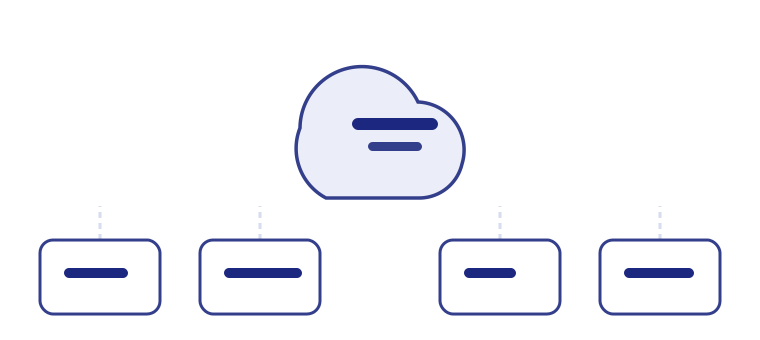
If a property owns one piece of software, it is the PMS. Everything else either feeds it or reads from it. Your booking engine writes reservations into it. Your channel manager pushes its availability out to the OTAs. Your restaurant posts charges into its folios. Your accountant pulls revenue out of it.
That central position is why the choice matters more than any other software decision a hotelier makes. A weak booking engine costs you some direct bookings. A weak PMS makes every day slightly harder for every member of staff, forever.

What a PMS does across a day
The abstract description above is accurate and not very useful. Here is the same thing as a working day at a forty-room property.
- 7:00 — the night audit has already runRoom rent and taxes were posted to every occupied room overnight, the business date rolled forward, and a day-end report is waiting. Nobody had to be present for it.
- 9:00 — the arrivals listReception opens the day's arrivals: fourteen expected, three of them OTA bookings that landed while the hotel slept, one corporate group of six on a company account.
- 11:00 — checkouts and housekeepingAs each guest settles, their room flips to vacant dirty automatically and appears in the housekeeping queue. The desk can see which rooms will be sellable and roughly when.
- 14:00 — check-ins beginA receptionist picks a booking off the chart, assigns a room that is marked clean, confirms the rate and opens a folio. Under a minute if the guest's details are already on file.
- 20:00 — charges accumulateDinner in the restaurant, a laundry bag, an airport transfer booked for the morning. Each posts to the right room's folio as it happens rather than being remembered on a slip.
- 23:00 — the day closesThe night auditor runs the audit, the cash position is counted against the system by payment mode, and the whole thing repeats.
Notice what is absent from that day: nobody retyped a booking, nobody walked upstairs to ask if a room was ready, and nobody reconstructed a bill from memory at checkout. That absence is the product.
The eight modules that matter
Vendors list dozens of features. In practice a PMS is judged on eight things, and the first four are non-negotiable.
| Module | What it has to do | How to test it in a demo |
|---|---|---|
| Reservations | Hold bookings from every source against dates and room types, without double-selling | Ask them to book a room already sold. It should refuse. |
| Front desk | Check-in, checkout, room moves, walk-ins, group blocks and the guest folio | Move a guest to another room mid-stay. The folio should follow. |
| Rates & inventory | Room types, rate plans, seasons, meal plans, extra pax, child pricing | Ask for a weekend MAP rate with one extra adult. Watch how long it takes. |
| Billing & GST | Correct slabs by tariff, CGST/SGST/IGST split, splittable folios, credit notes | Split one bill between a company and the guest, then print both. |
| Housekeeping | Live room status, attendant assignment, inspection, out-of-order blocks | Check a guest out and watch whether the room goes dirty by itself. |
| Reporting | Occupancy, ADR, RevPAR, source mix, city ledger, pace against last year | Ask for last Tuesday's numbers. It should take seconds. |
| F&B and banquets | Restaurant billing, KOT, and hall bookings by slot — if your property has them | Ask to charge a restaurant bill to a room, and to book a hall for lunch and dinner. |
| Accounting | Receivables, payables, city ledger, departmental P&L | Ask whether a checkout creates its own entries or an accountant retypes them. |
PMS vs booking engine vs channel manager
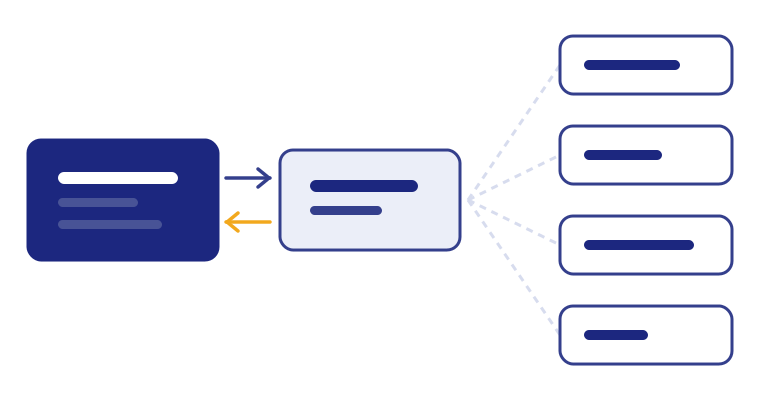
These three get confused constantly, partly because vendors bundle them differently and partly because the names are unhelpful. The distinction is about who each one faces.
| System | What it does | Who it faces | Can it run a hotel alone? |
|---|---|---|---|
| PMS | Runs the property — rooms, guests, folios, housekeeping, reports | Your staff | Yes |
| Booking engine | Takes reservations on your own website, commission-free | Your guests, directly | No |
| Channel manager | Syncs rates and availability with OTAs both ways | Booking.com, MakeMyTrip, Agoda | No |
An analogy that holds up: the PMS is the shop, the booking engine is your own till, and the channel manager is your stall in the market. You can sell without a stall. You cannot sell without a shop.
Where this matters commercially is bundling. Some vendors sell all three as one platform; others charge separately and connect them through third-party integrations that break at inconvenient moments. Ask explicitly which parts are native and which are bolted on.
Do you actually need one?
Not every property does, and a vendor is a poor judge of this. Two honest tests:
You need a PMS if
- You sell the same rooms through more than one channel
- You have more than about eight rooms
- You issue GST invoices and want them right without thinking
- You have a restaurant, bar or banquet hall
- More than one person takes bookings
- You cannot currently answer "what was our occupancy last Tuesday"
You can probably wait if
- Four rooms, one host, bookings on WhatsApp only
- You are not listed on any OTA
- You have no F&B and no functions
- The property is seasonal and shut half the year
- Nobody but you ever touches a booking
The moment you list on a second OTA, your register stops being a record and becomes a risk.
Cloud or on-premise
On-premise means the software runs on a computer at your property, with a server you own. Cloud means it runs in a browser and the data lives elsewhere. For independent properties in India the argument is largely settled, but not for the reason vendors usually give.
| Cloud PMS | On-premise PMS | |
|---|---|---|
| Upfront cost | Low — no server | High — server, licence, setup |
| Access from outside the property | Anywhere with a browser | Usually not, or via remote desktop |
| Updates | Automatic, included | Site visit, often chargeable |
| Backups | Handled for you | Yours to remember |
| During an internet outage | Depends — offline-capable builds keep billing running | Unaffected |
| Multi-property | One login across all | An installation per site |
What a hotel PMS costs in India
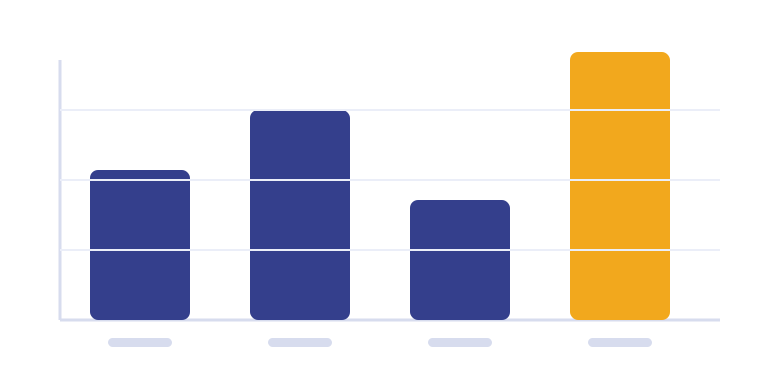
Published prices vary enormously because vendors package differently. Broadly, for independent properties:
The headline figure is rarely the whole cost. Before comparing two quotes, get both onto the same basis:
- Per user or unlimited? Per-user pricing quietly punishes you for having three shifts.
- Onboarding and training — one-off, and sometimes larger than the first year's licence.
- OTA connections — charged per channel by some vendors.
- Annual maintenance on on-premise products, typically 15–20% of licence.
- Per-booking fees on the booking engine. Check this carefully; it is where a "cheap" system becomes expensive.
- Modules you will need in year two — banquets, accounting, a second property.
How to choose without regretting it
- Write down your five hardest workflows firstBefore you see any demo. The group booking, the split folio, the banquet with rooms, the corporate account, the walk-in at midnight. This list is your test script.
- Shortlist three, not eightBeyond three, demos blur and you start choosing on salesmanship. Use review sites to build the shortlist, never to make the decision.
- Run the same script on eachYour script, their software, ideally with your own room types loaded. Watch how many clicks each awkward case takes.
- Ask where they are weaker than a competitorAny vendor who claims to win on every point is telling you about their sales process. The honest answer tells you what you are trading away.
- Compare three-year totalsLicence plus onboarding plus per-user plus the modules you will need in year two.
- Ask about getting your data outBefore you put data in. A vendor who is vague about export is telling you something.
Five expensive mistakes
- Buying on price alone. The cheapest system that your team fights every day costs more in wasted hours than the difference in licence, several times over.
- Ignoring F&B until later. If your restaurant and banquets run on separate software, somebody reconciles two systems every month, forever. Decide this at purchase, not after.
- Not setting rate plans up properly. Teams that book everything on a typed "special" rate destroy the value of every report the system will ever produce. One careful afternoon at setup decides this.
- Skipping the night audit. Miss it for a week and your dates, revenue and taxes drift apart. It takes two minutes; the discipline is the point.
- Giving everyone the manager password. Approval controls that everyone can bypass are decoration. Decide who may override a rate before go-live, not after the first argument.
Frequently asked questions
What does PMS stand for in hotels?
Property Management System — the core software a hotel runs on, holding rooms, rates, reservations, guest folios and housekeeping status. In hospitality it never means "performance management system".
What is the difference between a PMS and a channel manager?
A PMS runs your property internally. A channel manager faces outward, syncing rates and availability with OTAs. The channel manager feeds bookings into the PMS; it cannot run a hotel by itself.
Does a small hotel need a PMS?
If you take bookings from more than one source, or have more than about eight rooms, yes. See hotel software for small hotels.
What does a hotel PMS cost in India?
Roughly ₹8,000 to ₹60,000 a year for independent properties, depending on modules and size. Watch for onboarding, per-user and per-booking charges outside the headline price. See Zotaki pricing.
Is a cloud PMS better than on-premise?
For most independents, yes — no server, access from anywhere, updates included. On-premise still suits genuinely unreliable connectivity, though offline-capable cloud has narrowed the gap. See cloud-based hotel PMS.
What is a night audit?
The routine that closes the business day — posting room rent and taxes, rolling the date, flagging no-shows and unsettled folios, and producing the day-end position.
Can a PMS handle a restaurant and banquet hall?
Some can; many stop at rooms. If F&B or functions matter to your revenue, check specifically. See hotel PMS with restaurant POS.
How long does implementation take?
A few days to two weeks for an independent property. Most of that is entering room types, rate plans and taxes correctly, plus connecting OTAs.
What is PMS integration?
Connecting the PMS to systems that feed or read from it — channel manager, booking engine, payment gateway, restaurant POS, accounting. Native integrations avoid the failure points of third-party connectors.
Can I move from one PMS to another?
Yes, and it is easier than most hoteliers fear. Future reservations, guest profiles and room and rate configuration can usually be migrated. Ask about migration and data export before you sign.