
Distribution
Hotel channel manager software
One inventory across every OTA, one rate change reaching all of them, and reservations landing on your chart without anybody typing. Here is how two-way sync actually works, what genuinely causes the overbookings it is supposed to prevent, and the questions that separate a solid channel manager from a fragile one.
- A channel manager keeps rates and availability identical everywhere — sell a room anywhere, it closes everywhere.
- Two-way sync is the whole point. One-way push still leaves someone typing OTA bookings in by hand, which is where most overbookings begin.
- "200+ channels" is close to meaningless. Four channels connected properly beats two hundred connected badly.
- Ask for the sync interval in seconds. "Instant" is a marketing word; fifteen minutes is a window in which a room sells twice.
- It does not create demand. It removes the errors and the admin that stop you selling everywhere confidently.
What a channel manager is
A channel manager sits between your property's inventory and the online travel agencies you sell through. Its job is narrow and important: make sure every channel is showing the same rooms at the same prices, and that a sale on any one of them is reflected immediately on all the others.
Without one, a property selling on four OTAs is running four separate inventories by hand. Somebody logs into each extranet, sets availability, updates rates for the season, and closes rooms when they sell. It works until it does not, and the failure mode is a guest arriving to a room you have already given away.
A channel manager does not sell more rooms. It makes it safe to list everywhere at once.
How two-way sync works
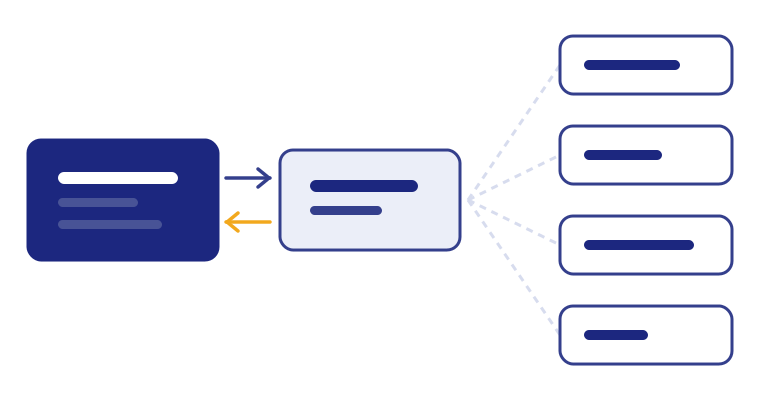
The word "sync" hides an important distinction. Traffic flows in two directions, and plenty of products only do one of them well.
| Direction | What travels | What breaks without it |
|---|---|---|
| Outbound (push) | Rates, availability, minimum stay, closed-to-arrival, stop-sell | You update four extranets by hand and they drift apart |
| Inbound (pull) | New reservations, modifications, cancellations, guest details | Somebody retypes OTA bookings — the single biggest source of overbookings |
When you evaluate a product, ask which of those two it does and how quickly. Some cheaper tools push rates competently and leave inbound reservations to a daily email digest. That is not a channel manager; it is a rate-loading tool with a marketing budget.
Pooled inventory vs allocation
This is the single most important technical distinction, and it is rarely explained clearly.
Allocation
- You give each channel a fixed number of rooms
- Booking.com gets 5, MakeMyTrip gets 5, direct gets 5
- Safe against overbooking, but you sell fewer rooms
- If MakeMyTrip sells out its five, it stops selling while rooms sit empty
- Requires constant manual rebalancing
Pooled inventory
- Every channel sees all 15 rooms
- A sale anywhere reduces availability everywhere
- Maximises what you can sell
- Requires genuinely fast sync to be safe
- What almost every modern channel manager does
Pooled is right for nearly everyone, provided the sync is fast. Allocation persists mainly in older systems and in arrangements where a particular channel has contracted rooms. If a vendor offers only allocation, you are looking at an older architecture.
What actually causes overbookings
Hoteliers buy channel managers to stop overbookings and are then surprised when one happens anyway. It is worth knowing the real causes, because most of them are not the software's fault and two of them are.
| Cause | Whose problem | The fix |
|---|---|---|
| Slow sync interval | The software's | Ask for the actual interval; near real time only |
| One-way sync — OTA bookings typed by hand | The software's | Insist on automatic inbound reservations |
| Walk-in taken and not entered | Yours | Enter it at the desk, not at end of shift |
| Booking taken on the phone into a notebook | Yours | Every booking goes into the PMS immediately |
| Room blocked for maintenance but not marked | Yours | Block it in the system, not in someone's head |
| Deliberate overbooking to cover no-shows | Yours, by choice | Fine, if it is a decision rather than an accident |
| OTA extranet edited directly, bypassing the channel manager | Yours | Make the PMS the only place anyone changes inventory |
Which channels actually matter in India
Vendors advertise connection counts because it is an easy number to make large. For an independent Indian property it is close to irrelevant — you will sell on four to six channels, and what matters is whether those specific ones are solid.
| Channel | Typical role | Worth checking |
|---|---|---|
| MakeMyTrip / Goibibo | Often the largest domestic source | Whether both are connected, not just one |
| Booking.com | Strong domestic and main inbound channel | Whether modifications and cancellations flow back |
| Agoda | Significant for inbound, especially from Asia | Rate plan mapping depth |
| Airbnb | Matters for homestays, villas, apartments | Whether it is supported at all — many do not |
| Cleartrip, EaseMyTrip, Yatra | Secondary domestic volume | Only if you actually sell there |
| Your own booking engine | The only channel with no commission | Whether it shares the same inventory pool |
Ask the vendor to name your channels specifically and confirm two-way support for each. "We connect to all major OTAs" is an answer worth pushing on.
Rate parity, honestly
Rate parity means showing the same public rate across channels. OTAs generally expect it, monitor it, and can penalise visibility when they find you undercutting them on your own site.
A channel manager makes parity practical, because one change reaches everywhere rather than requiring four edits that inevitably drift. But parity does not mean you cannot compete on your own site. The legitimate levers are:
- Member rates visible only to guests who sign in or hold a code — not a public rate, so not a parity breach in most agreements.
- Inclusions rather than discounts — breakfast, early check-in, a late checkout, an upgrade on arrival.
- Packages that do not exist as a comparable product on the OTA.
- Flexibility — a friendlier cancellation policy on direct bookings costs you nothing on most nights.
Read your own OTA contracts rather than relying on general advice, including this. Terms differ by channel and by market.
Holding rooms back for direct
Most channel managers let you set an inventory buffer — hold two rooms out of the pool so they remain available for your own booking engine and for walk-ins.
It is a blunt tool. You are declining OTA demand in exchange for the chance of a commission-free booking that may not come. It makes sense when you reliably fill through direct and walk-in channels on particular dates — a festival weekend, a local wedding season — and much less sense as a permanent setting on ordinary Tuesdays.
Seven questions to ask a vendor
- What is the actual sync interval, in seconds?Not "instant" or "real time" — a number. Then ask what happens if a channel's API is down.
- Is inbound two-way, including modifications and cancellations?New bookings are the easy part. Amendments are where weaker products quietly fail.
- Are my specific channels connected?Name them. MakeMyTrip, Goibibo, Booking.com, Agoda, whatever you sell on.
- Pooled inventory or allocation?If allocation only, you are looking at older architecture.
- Is it native to the PMS or a third-party integration?Native means one vendor to call when something breaks, which matters more than it sounds at 9pm on a Saturday.
- How are rate plans mapped?Ask to see the mapping screen. This is where setup goes wrong and where errors hide for months.
- What does it cost per channel?Per-channel fees change the comparison entirely once you sell on five OTAs.
Frequently asked questions
What is a hotel channel manager?
Software that keeps rates and availability identical across every OTA you sell on. Sell a room anywhere and it closes everywhere; change a rate once and it reaches every channel.
How does it prevent overbooking?
By holding one shared inventory pool rather than allocating rooms per channel. Overbookings still occur when sync is slow, when inventory is allocated rather than pooled, or when a walk-in is not entered.
What is two-way sync?
Rates and availability push out; reservations, modifications and cancellations come back automatically. One-way push leaves OTA bookings to be typed in — the most common source of overbookings.
Does it work without a PMS?
Some run standalone, but poorly — without a PMS the channel manager cannot see walk-ins or phone bookings, so its inventory picture is incomplete.
How fast should sync be?
Near real time — seconds to a couple of minutes. Batching every fifteen or thirty minutes leaves a window for double-selling.
What is rate parity?
Showing the same public rate across channels. You can still differentiate through member rates, inclusions and packages rather than straight public discounts.
Which OTAs should an Indian hotel connect?
Usually MakeMyTrip and Goibibo domestically, Booking.com and Agoda for domestic and inbound, Airbnb for homestays. See the India buyer's guide.
Does it increase bookings?
Indirectly. It creates no demand, but it lets you list everywhere safely and stops lost nights from stale availability. The benefit is usually fewer errors and far less admin.
Can I hold rooms back for direct bookings?
Yes, with an inventory buffer — but it is blunt. Use it tactically on dates you know will fill rather than as a permanent setting.
What does it cost in India?
Often bundled with a cloud PMS, or a few thousand rupees a month standalone. Watch for per-channel connection fees. See Zotaki pricing.