
India buyer's guide
Best hotel management software in India
The Indian market has requirements that global buying guides simply do not cover — GST by tariff slab, MakeMyTrip and Goibibo, Form C for foreign guests, patchy connectivity, and properties where the banquet lawn earns more than the rooms. This guide covers what actually decides fit here.
- GST is the first filter. Accommodation is taxed by tariff slab, not a flat rate. Software that gets this wrong creates a compliance problem, not an inconvenience.
- Check the Indian OTAs specifically. "200+ channels" means nothing if MakeMyTrip and Goibibo are not solid.
- F&B and banquets decide more Indian purchases than anything else. Most PMS products stop at rooms.
- Ask what happens in an outage — the honest answer varies enormously between cloud vendors.
- Support in your language, on your hours. Your front desk works evenings and Sundays.
What makes the Indian market different
Most hotel software buying advice online is written for North American or European properties. It weights things like revenue management integrations and loyalty interoperability that matter to a chain in Chicago and almost never decide a purchase in Coimbatore.
Five things genuinely change the answer in India, and they are worth stating plainly before any product comparison.
| Factor | Why it changes the decision here |
|---|---|
| GST by tariff slab | Accommodation is not taxed at one flat rate. Software has to apply the right slab per room night and split CGST/SGST or IGST correctly. |
| Domestic OTA mix | MakeMyTrip and Goibibo drive a large share of domestic demand — connections international vendors sometimes treat as secondary. |
| F&B and functions | Restaurants, bars and wedding lawns are often a third or more of revenue at Indian properties. |
| Foreign guest reporting | Form C obligations for foreign nationals, plus ID capture norms including Aadhaar masking. |
| Connectivity reality | Broadband is far better than it was and still not uniform. Outage behaviour matters. |
GST — the first filter
Of everything on this page, GST handling is the one where getting it wrong creates a real problem rather than an annoyance. Accommodation in India is taxed by the value of the room night, so a property selling rooms at different tariffs across seasons is applying different rates through the year.
What that means practically for software:
- Slab by tariff, applied automatically — not a single tax rate set once in configuration.
- CGST/SGST or IGST split by state of supply — an out-of-state corporate booking is not taxed like a local walk-in.
- SAC codes on the invoice, and the guest's GSTIN captured where the bill goes to a company.
- Restaurant and banquet services taxed on their own basis, separately from room revenue, on the same folio.
- Credit notes that reference the original invoice properly when something has to be reissued.
- Filing-ready summaries your CA can work from without rebuilding the month.
The OTAs that actually matter here
Channel manager marketing loves a big number — "connects to 200+ channels". For an independent Indian property that number is close to irrelevant. What matters is whether the four or five channels you actually sell on are connected properly, with two-way sync that does not drift.
| Channel | Typical role for Indian independents |
|---|---|
| MakeMyTrip / Goibibo | Often the largest single source of domestic bookings |
| Booking.com | Strong domestic and the main inbound international channel |
| Agoda | Significant for inbound, particularly from Asia |
| Airbnb | Matters for homestays, villas and serviced apartments |
| Your own website | The only channel that costs nothing per booking |
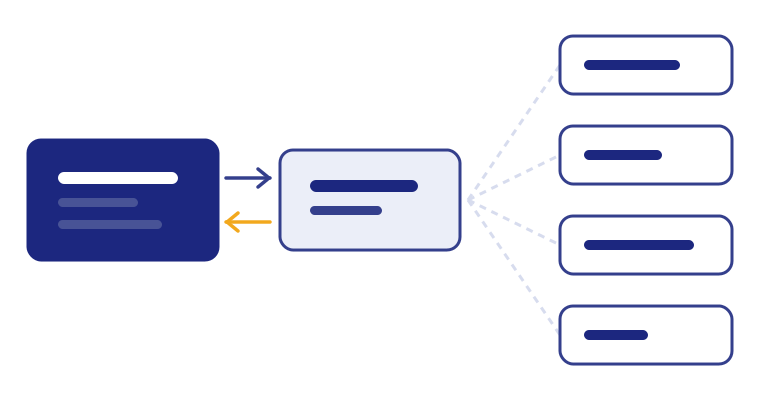
The specific thing to test: ask the vendor to change a rate and show you it reaching a channel, then take a booking on that channel and show it landing on the room chart. Vendors who sync on a long timer rather than near real time will be visibly uncomfortable with that request.
F&B and banquets — the decision most buyers postpone
This is where the Indian market diverges most sharply from the assumptions in global buying guides. A mid-size Indian hotel frequently runs a restaurant, sometimes a bar, and very often a banquet hall or lawn that hosts weddings, receptions and corporate functions. At many resorts, function revenue rivals room revenue.
Most hotel PMS products stop at rooms. The consequences are predictable:
Rooms-only PMS + separate systems
- Restaurant runs on its own POS with its own database
- Charging a meal to a room means manual entry, twice
- Banquets live in a diary or a spreadsheet
- Somebody reconciles two or three systems monthly
- No single F&B figure without assembling it
- Food cost against sales is effectively unknowable
One platform covering rooms, F&B and functions
- Restaurant bills post to the guest folio in one tap
- Halls booked by slot — lunch and dinner on one date
- One day-end covering rooms, F&B and banquets
- Recipe-linked consumption gives real food cost
- One set of books, one GST position
- Nothing to reconcile between vendors
The banquet point deserves emphasis because it is the one most software handles worst. A hall is sold by slot, not by night — a lunch party and an evening reception can occupy the same hall on the same date. Products that model halls as room types simply cannot express that, and the workaround is a diary. Ask for it specifically in a demo.
Form C and guest records
Indian properties accommodating foreign nationals have reporting obligations, and the practical failure is almost never the filing — it is the data collection. Chasing a guest for passport and visa details after they have settled into the room is where the process breaks.
- Capture at check-in, not afterwards — passport number, visa type and number, date of arrival in India, nationality and address.
- Aadhaar masking for Indian guests, in line with UIDAI guidance, so your records never hold the full number.
- A searchable guest register — the ability to answer who stayed in room 204 last March in seconds rather than by flipping through a book.
- Role-based access to documents, so a housekeeping login cannot open a guest's passport scan.
- Retention you control, in line with your policy under the DPDP Act.
Connectivity and the outage question
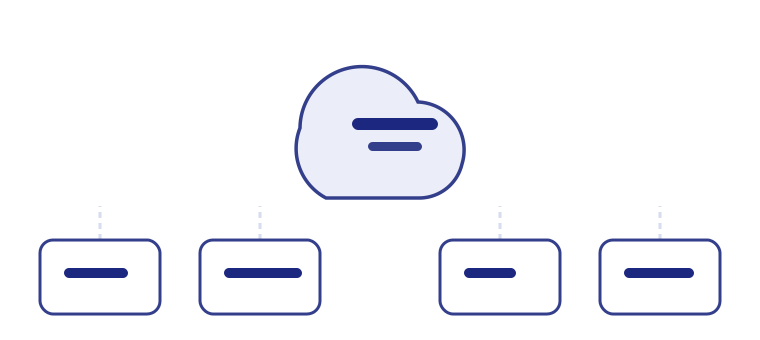
"Cloud will not work here, our internet is unreliable" is sometimes a fair assessment and often a reflex from a decade ago. The useful version of that concern is a specific question, asked of every cloud vendor:
"When my internet drops at 8pm on a Saturday, what exactly stops working?"
The answers vary far more than the marketing suggests. Some systems keep billing and KOT printing running on the local network and sync when the line returns. Others stop entirely. A vendor who answers that question crisply, with detail, is telling you they have thought about Indian conditions. A vendor who says "our uptime is 99.9%" has answered a different question.
What it costs in India
Two observations worth more than the ranges themselves. First, the software is almost never the expensive part of your distribution — OTA commission usually costs a property many times its annual licence, which is why a commission-free booking engine changes the arithmetic more than a cheaper PMS does. Second, the headline price is rarely the whole cost: onboarding, per-user charges, per-channel OTA fees, per-booking commission on the booking engine and second-year modules all sit outside it. Get three-year totals on the same basis before comparing.
By property type
| Property | What matters most | What you can skip |
|---|---|---|
| Business hotel, 40–100 rooms | Corporate billing, city ledger with ageing, GST accuracy, channel manager depth | Elaborate loyalty schemes |
| Resort with F&B and lawns | Banquets by slot, packages and meal plans, recipe-linked food cost | Airport-hotel style fast check-in flows |
| Hostel | Bed-level inventory rather than rooms, dorm mixing rules | Banquets, corporate ledger |
| Homestay or villa | Simplicity, mobile access, Airbnb connection | Night audit depth, city ledger, POS |
| Serviced apartments | Long-stay billing, mid-tenancy occupant changes, monthly invoicing | Daily housekeeping workflows |
| Small group, 3–10 properties | One login, central reservations, consolidated reporting, shared guest history | Enterprise revenue management |
Support, and why it decides renewals
Features win demos. Support decides whether you renew. Your front desk works evenings, Sundays and public holidays, and a system problem at 9pm on a Saturday is not a next-business-day matter.
- Language. Hindi and English at minimum; regional languages matter where your staff are more comfortable in them.
- Channel. WhatsApp is how Indian hospitality actually communicates. A support model that is email-only is a support model built for somebody else.
- Hours that match a hotel's, not an office's.
- Onboarding and training included, and whether it is repeated when you hire new staff.
- A named response time — and a reference property to confirm it is honoured.
Frequently asked questions
What is the best hotel management software in India?
It depends on your property. For independents the deciding factors are usually native F&B and banquets, correct GST by tariff slab, solid Indian OTA connections, and support in your language. Shortlist three that meet those and test them on your own workflows — see how to choose.
How is GST applied on hotel rooms?
By tariff slab rather than a single flat rate, with CGST/SGST or IGST split by state of supply and SAC codes on the invoice. Rates change — confirm current slabs with your CA.
Which OTAs matter most for Indian hotels?
MakeMyTrip and Goibibo for domestic, Booking.com and Agoda for domestic and inbound, Airbnb for homestays and villas. Check your specific channels rather than a headline connection count. See channel manager software.
What is Form C?
The reporting requirement for foreign nationals — passport, visa details, arrival date and nationality. Good software captures it at check-in rather than leaving you to chase the guest. See guest self check-in.
How much does hotel software cost in India?
Roughly ₹6,000 a year at entry level to ₹60,000 or more with F&B, banquets and accounting. Compare three-year totals including onboarding and per-booking charges. See Zotaki pricing.
Cloud or on-premise?
Cloud suits most independents. The real question is outage behaviour — ask specifically whether billing and KOT printing continue locally. See cloud-based hotel PMS.
Does it need to handle restaurants and banquets?
For most Indian properties, yes. F&B and function revenue is a large share of turnover, and a rooms-only PMS leaves you reconciling systems monthly. See PMS with restaurant POS.
Is Indian software as good as international products?
For Indian properties, often better on what matters locally — GST, Indian OTAs, Form C, rupee pricing and support in your time zone. International products may lead on global chain features you will not use.
How long does implementation take?
A few days to two weeks on a cloud system. Most of it is entering room types, tariffs and taxes correctly and connecting OTA extranets.
What support should I expect?
Hindi and English at minimum, by phone and WhatsApp, during the hours your front desk works — including evenings and weekends. Ask for a named response time and check it with a reference property.